Welcome!

This is a new experience for me - to have my own blog!
Hopefully it can reflect the purpose of books: words with meaning and a message.

Monday, October 10, 2011

PART C of Portfolio (AKA the final word)


Man's mind, once stretched by a new idea, never regains its original dimensions.  ~Oliver Wendell Holmes
Oliver Wendell Holmes is a wise person.  This saying reflects where I have finished the journey of ETL401 Teacher Librarianship.  The subject has provided vision of new directions in education.  In past blogs, I have referred to the position of the twentieth century librarian and the introduction of new technologies into the library and the change to the librarian’s role.  ETL401 has expanded the role and possibilities of a Teacher Librarian.  I am enthused, vitalised and excited about the prospects of working in a school library setting.  I believe the library extends beyond four walls. A library has no boundaries.  To be honest, I was naive in my view of the role of a teacher librarian and should have, in hindsight, researched the role a TL is expected to play in a forward thinking environment.  Wong (2010) makes an excellent point regarding TL’s stating they “are skilled in accessing and evaluating information regardless of delivery system, book or computer, and providing leadership in the appropriate use of newer information technologies.”  Herring (2007) also made a very valuable point about the role of the library in that it should be seen as a centre of learning first and a centre of resources second.
From that, the TL is then well placed to educate the twenty-first century student in providing lifelong learning skills towards information literacy through a guided inquiry process. 
To the uninitiated, this may seem puzzling statement.  Lifelong learning is a positive concept which all educators should be aiming for in their students. Information literacy is the ability to access, evaluate and use information from a variety of resources, to recognise when information is needed and to know how to learn (Doyle, 1996 in Langford, 1998).  The information literate student can access, use and transfer information in their pursuit of lifelong learning.  With access to many forms of information available, lifelong learning is possible.  Learning need not end once a person has completed their formal education. 
Underlying the concept of information literacy is a belief that made an incredible impact on me and about which I have written previously on this blog – the idea of the ethical use of information.  Purcell (2010) made note of it in her article.  Not only do we want students to use the information in the transfer of knowledge, we want them to use it wisely, with consideration and with the use it was intended.  Herring and Tarter (2007) believe that students need to also understand that print does not always equate to truth.
There have been many light-bulb moments during ETL401.  I have read on forums about the use of inquiry models within schools and some experiences.  There have been mentions at different times of Web 2.0, the Cloud, Wikis, Blogs and on my own blog, an introduction by a reader of accessing Shelfari (a way of keeping track of books you have read).  For each of these I have thought of a multitude of ways they could be introduced to students.  The use of guided inquiry and the positive learning that come from these provides yet another reason to work in a library.  Other minor findings include the discovery of the amount of reading material available relating to the role of the Teacher Librarian.  There is endless information out there.  What I have read and discovered is really the tip of the iceberg.  If your interest is sparked, google the topic on Google Scholar (yet another finding from this course – I did not even know it existed!).
In topic 3 of ETL401, we were asked to watch a webinar on the teacher librarian and the curriculum by Judy O’Connell.  The title has stayed with me – Lifesavers of Learning.  What a wonderful way to describe the role of a TL.  They can provide the information, resources and support for the school curriculum.  They could provide all of that if they are supported by the school administrators, particularly the Principal.  In looking at the obstacle a Principal may be in a TL reaching their potential, I came across some very good advice in research by Gustafson (2011) and Kaldenberg (2011): the TL needs to be proactive.  Show the Principal and school what the TL can offer, share ideas, initiate collaboration, assist the Principal in using new technologies, introduce a workable, relevant guided inquiry model and educate the staff.  Also, most importantly, be proud of all achievements and share them with whoever will listen.
In conclusion, my mind has been stretched in regard to the role of the teacher librarian and it will never, ever regain its original dimension.  What a wonderful learning journey ETL401 has been.

REFERENCES
Gustafson, K. (2011). A Dozen Ways the School Librarian Can Help Administrators Find Time. School Library Monthly, 27(5), 36-38. Retrieved from EBSCOhost.
Herring, J. (2007).  Teacher Librarians and the school library.  In S. Ferguson (Ed.) Libraries in the twenty-first century: charting new directions in information (pp.27-42).  Wagga Wagga, NSW:Centre for Information Studies, Charles Sturt University
Herring J. & Tarter, A. (2007).  Progress in developing information literacy in a secondary school using the PLUS model.  School Libraries in View, 23, 23-27.
Kaldenberg, K. (2011). Go, Set, Ready: Collaborative Relationships for 21st Century Learning. Teacher Librarian, 38(4), 44-47. Retrieved from EBSCOhost.
Langford, L. (1998).  Information Literacy: A Clarification.  From School Libraries Worldwide, Volume 4, Number 1, 1998, 59-72.
Purcell, M. (2010).  All Librarians Do Is Check Out Books, Right?  A Look at the Roles of a School Library Media Specialist.  Library Media Connection, 29(3), 30-33.  Retrieved from EBSCOhost.
Wong, G. W. (2010). Facilitating Students' Intellectual Growth in Information Literacy Teaching. Reference & User Services Quarterly, 50(2), 114-118. Retrieved from EBSCOhost.


On a lighter note and for those who read this blog to follow what I’m reading, I have had on my bedside for a week The Red Queen by Phillipa Gregory.  I can now pick this up and enjoy it without the study pressures that having been invading my every moment and thought.  I’m looking forward to starting the book once I have pressed “Post” on this blog.  The Harlequin by Bernard Cornwell which I mentioned last time was incredibly graphic in its depictions of war in the 18th Century.  I am now on the lookout for the second book in this series and hope there was some peace in the land (as if).  Finally, a special note of thanks to Joan Amiet, a wonderful teacher librarian who cares greatly about books and introducing children to the joys of literature.  She has supplied a long list of cat books.  I will be posting their titles in my next blog.  

Tuesday, September 20, 2011

A New Book Book


It is a very proud day.  My eldest son, who is 7, has asked me to purchase a "Book Book" for him.   It is his first.   I wonder how many people have a book book.  If you don't have one you may not know what it is.  A book book is a book in which you write the title and author of all the books you read.  I have had mine for many years and it sits in my bedside drawer.  I write the book in as soon as I have finished it and I might also add some detail regarding genre and the year I read it.  I also have a section that I write in authors I enjoy and note the number of books I have read of theirs.  My son loves reading and seems to have book in hand most times I look at him (or a DS or Wii remote!) much like his Uncle.  He has been reading 3 books at once (see the books below) over the last 2 days and mentioned he wanted to read 100 books.  I suggested the book book and he loved the idea of it. The worrying bit is where to get the 100  books from?  I look forward to seeing the books change as the years go by and wonder which books won't make the grade to be entered.


Monday, September 12, 2011

The Depths of Information Literacy part 1

The idea of assisting a "life long learner" in becoming "information literate" (or is it the other way around?) weighs heavily on me.  It is a very big responsibility that requires a lot of cooperation.  Tied to this is the idea of the ethical use of information.  I recently read an article that mentioned a quote from Dipenbrock (1997) in regards to information literacy - the idea that every act that records symbols of human communication outside of the human body is a type of literacy, be it textual, visual, gestural, social or digital.  Have you every received an email and you are not sure of the "intonation"?  Is the person being sarcastic, sympathetic, straight to the point, funny, emotional due to illness or brief due to pressures at their end.  You reply and then your emotion is misinterpreted and so it goes on to the point where no one is sure where they stand and how people feel about them.  That gestural literacy is needed when we speak.  You read more than words.  You read the person.  So as an educator who wants to instill in the student information literacy skills, one must also ensure that information skills are used ethically.  Information can be so objective.  Use it wisely and with the correct intention.  Think of what is it behind the information you can't "see".
Another interesting point of in relation to information literacy - what is it?  Well in centuries past it could have been classed as writing your name.  Today it involves being able to function well in society which entails the ability to read, use numbers and to find information and use it appropriately.  For example, in my mum's childhood she needed to be able to add, subtract, write clearly (in perfect handwriting) and read what was required for their future occupation.  Today she needs to be able to use her new wizz-bang computer and send us photos (by the dozen), skype with her grandchildren, word process letters, access facebook (if she can find the small piece of paper that has her password on it), search the internet everytime someone mentions an illness and maybe, possibly find my blog to read.  She is information literate today to a point.  I still can't convince her to change her mobile phone so I can send her photos.  The definition of information literate changes as society demands.  What will an information literate person look like in 20 years?  Something different again.

What a find at the local supermarket!  A book for a whole $4.  Best thing about it is I'm enjoying every moment of it.

Tuesday, August 30, 2011

Cats and Libraries

Today I say goodbye to my most beautiful cat Sali.  He is 9 and a half years old.  He has been the most wonderful cat whom my whole family adores.  Sali was very "helpful" when I was studying or reading.  He would lay on the books and papers I needed to weigh them down so they wouldn't blow over in the wind (or so he probably thought).  He would also choose my reading time at night to "groom" me and I would end up reading with my sheet over my head.
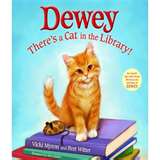
A couple of years ago my mum gave our kids a copy of Dewy the Library Cat.
It is a true story about a cat left in the return box at a library in the States.  The librarians kept him and named him Dewy Readmore Books.  He was a treasure and all the people loved him being around.  Cats are calming and books are too.  No wonder they go so well together.  There are many cats that live in libraries around the world.  Click on this link http://www.ironfrog.com/catsmap.html to see in which libraries around the world cats reside.  Those in Australia are also listed.

I remember in my hometown of Bendigo there was a cat that lived in the Collins Bookshop there.  He was one of the attractions of going into the shop.  Cats and books are a delightful combination.  There is nothing finer than reading a book and stroking a sleeping cat on your lap.


How about books about cats.  Some of our favourites are:
If you have any good books about cats, please add in the comments section.  I'd love to hear about other fiction cat stories.  I have always wanted to start a collection of something - maybe this is my thing.
RIP SALI JEFFREY FRANKLIN 2002-2011


Sunday, August 21, 2011

The Role of the Teacher Librarian

Can you remember the teacher librarian at your school?  My Primary School had Miss Patterson who was terrific.  She read us stories and helped find the cards when returning our library books (pre-computer days).  She also introduced me to the books of Laura Ingles-Wilder and Enid Blyton as well as assisting in locating information in non-fiction books on her neatly stacked shelves.  My secondary school librarian was a touch more rushed in her approach.  Computers were introduced at this time but not as a working system in the library.

Fast forward to 2011 and the teacher librarian no longer manages a simple library full of books but a digital resource centre without boundaries. The teacher librarian role has developed, changed and transformed.  They must now assist the school community in functioning in an increasingly complex world (Purcell).  They must also  assist students in becoming information literate.  Not to mention becoming ethical information users.  There is the expectation that as an information specialist the teacher librarian must stay ahead of the school community in digital information.  While grounded in sound teaching pedagogy.  As much as I love reading for enjoyment and as much as I hope to instill that love in my students, a teacher librarian has much more to do than this.  And, to be honest, I find that an exciting prospect!

As for personal reading, I have been far too busy completing a uni assignment to finish Lord John.  However, a little while ago I was invited to read The Hypnotist by Lars Kepler and to be part of its review process.  Mystery/thriller is generally not my choice of books.  Surprisingly I really enjoyed this and couldn't put it down.  I look forward to his next book.


Monday, August 15, 2011

I need a mind shift....

Each time I enter a classroom to teach, I have a particular goal for the end of the lesson.  I then move onto the next small goal.  And so it goes on for the day.  Each small step at the end of the unit of work or term or even day will eventually merge into all other information given to represent knowledge.  And so it goes on for all students in classrooms.  However, a Teacher Librarian needs to manage all of the information and then break it down into smaller parts.  I suppose if they were bricklayers they would have a wall built and  be able to pull out a brick, show it and then replace it.  A classroom teacher is really taking a brick one at a time to build a wall.  The classroom teacher teaches while the Teacher Librarian services.  That's a lot of information I need to get my head around.  The Teacher Librarian role is complex and goes far beyond checking out books at the front desk.  In my next post, I will amaze you with how broad a Teacher Librarians role is.  For now I have an assignment to write.

I have started reading this treat from Diana Gabaldon.  Another book about Lord John.  I have read her Outlander series and all of the Lord John books so far.  I am very fond of historic fiction and read widely from this genre.  At the same time I enjoy good biographies and non-fiction.  Who am I kidding - I'll read anything.


I picked this book up recently and would recommend it to any 10 + girl.  It was an easy and enjoyable book set in the time of the French revolution.

Thursday, August 11, 2011

The Role of a Librarian

I wonder what some schools think the role of a Librarian should be? Some schools I have been in contact with believe that the role of the traditional librarian is obsolete.  That in the not too distant future schools will not have a librarian as they expect the classroom teacher will fulfill this role.  The IT specialist will take over the library and take on this role as well.  What a worry (a personal worry when it means I could find it very difficult to find a position).  A teacher Librarian and IT specialist are different even though their jobs can overlap to some extent.  But, is an IT specialist going to teach how to find information effectively and efficiently and, more importantly, use that information ethically?  A teacher librarian in the digital age is still very much needed to fulfill a broad spectrum of roles.
As for personal reading, I recently finished The Happiest Refugee by Anh Do and enjoyed his personal perspective of growing up in Australia.